Evie Press Kit
A private AI voice assistant for families. Speech recognition, the language model and the neural voice all run on the device — after a one-time model download, Evie works offline forever.
Fact sheet
| App name | Evie — Offline Family AI |
|---|---|
| Developer | Human Before AI |
| App Store | apps.apple.com/app/id6773264849 |
| Category | Education (primary), Productivity (secondary) |
| Age rating | 13+ (deliberate — see “Why 13+” below) |
| Price | Free to download and use. Evie Pro: US$9.99/month, US$79.99/year, or US$249.99 one-time lifetime. |
| Platforms | iPhone and iPad (universal app since v1.12.0). iOS / iPadOS 18 or later. |
| Requirements | At least 6 GB of memory and an Apple Neural Engine. iPhone: iPhone 14 or newer — every model, including 16e and 17e — plus iPhone 12 Pro / 12 Pro Max / 13 Pro / 13 Pro Max. iPad: any M-series iPad, iPad mini (A17 Pro), and the 11th-generation iPad (A16). Not iPhone 13 or 12 (non-Pro), iPhone 11, or SE. |
| First released | 14 June 2026 |
| Latest release | v1.13.0 — Back to School lessons, August 2026 |
| Languages | English |
| Privacy label | Data Not Collected. No accounts, no analytics, no advertising or attribution SDKs, no server backend. |
The short version
Most AI assistants a child can reach send every word they say to a server. Evie doesn't have a server. The whole pipeline — speech to text, the language model, and the spoken reply — runs on the Apple Neural Engine in the device the family already owns. There is no sign-up, no account, and no network call after the first-run model download, so a family can put the device in airplane mode and Evie still answers.
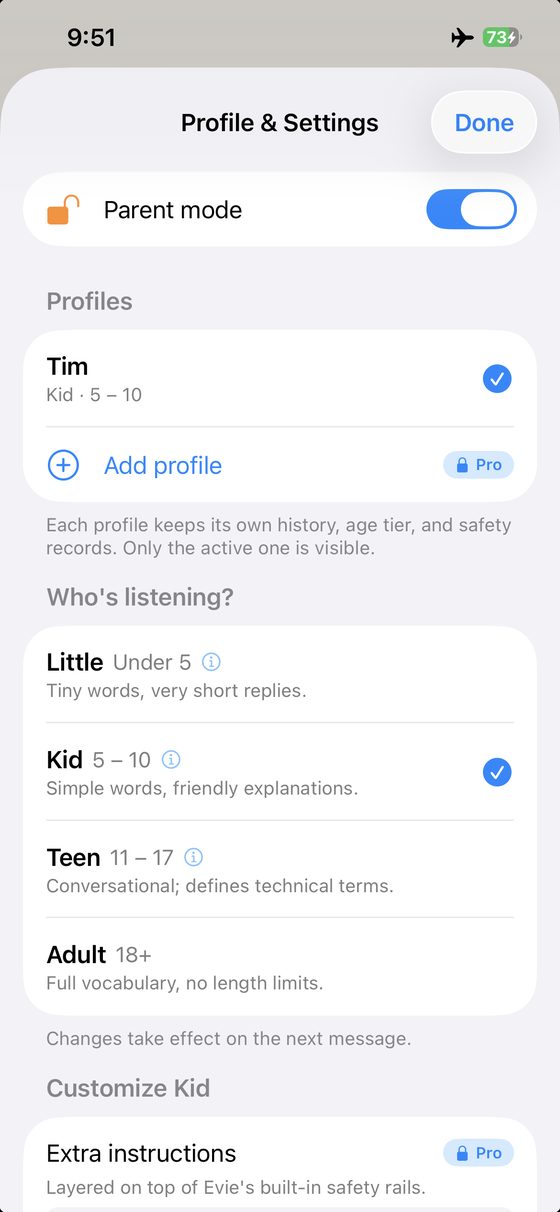
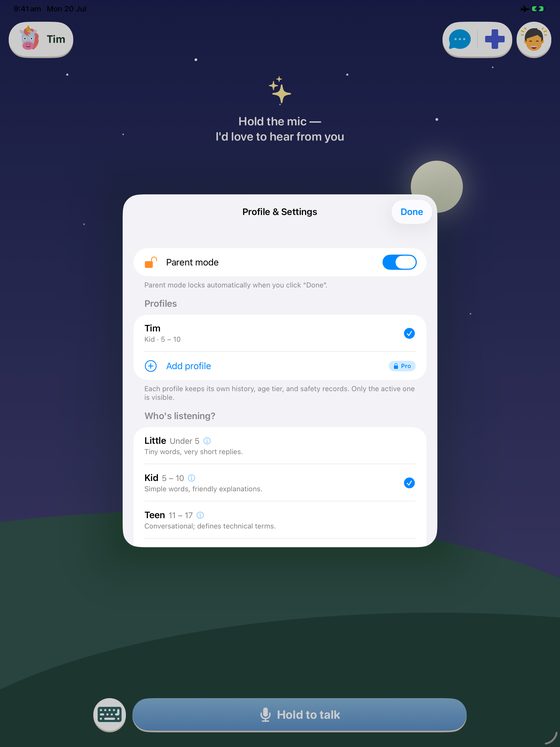
The product is designed around a young child (the built-in personas run from “Little, under 5” through “Kid”, “Teen” and “Adult”), and it is built for the parent who wants the curiosity upside of AI without the cloud, the tracking, or the unsupervised rabbit holes.
What makes it different
1. It genuinely runs offline
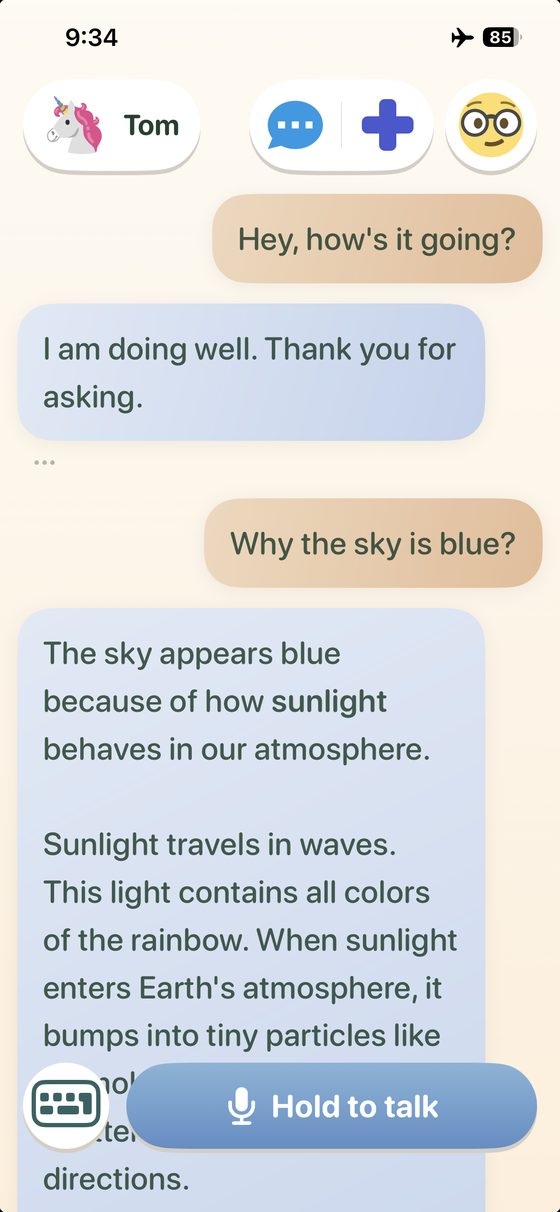
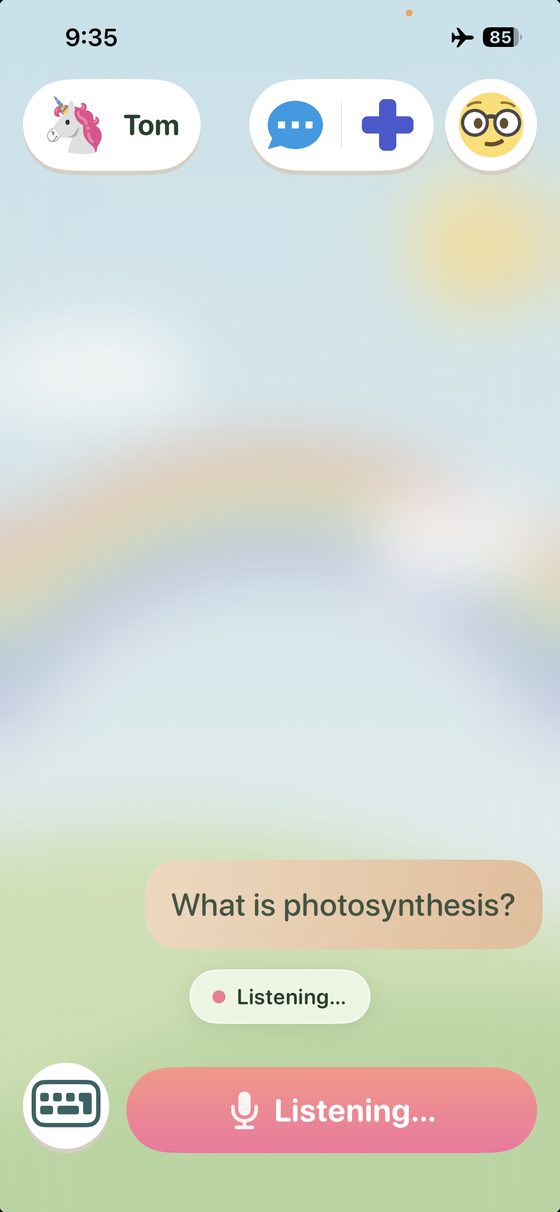
Speech recognition is Apple's SFSpeechRecognizer pinned to on-device recognition. The language model is Gemma 4 E2B, converted to Core ML and running on the Neural Engine. The voice is Kokoro-82M, also Core ML. Replies stream sentence by sentence, so the voice starts speaking while the rest of the answer is still being generated.
2. Lessons — teaching how to think, not what to know
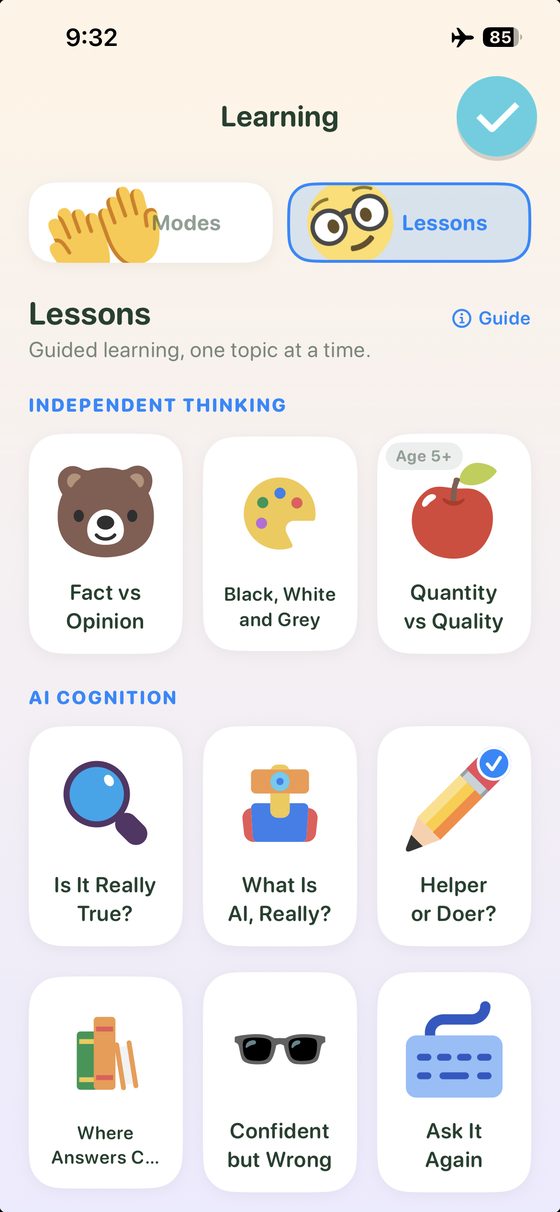
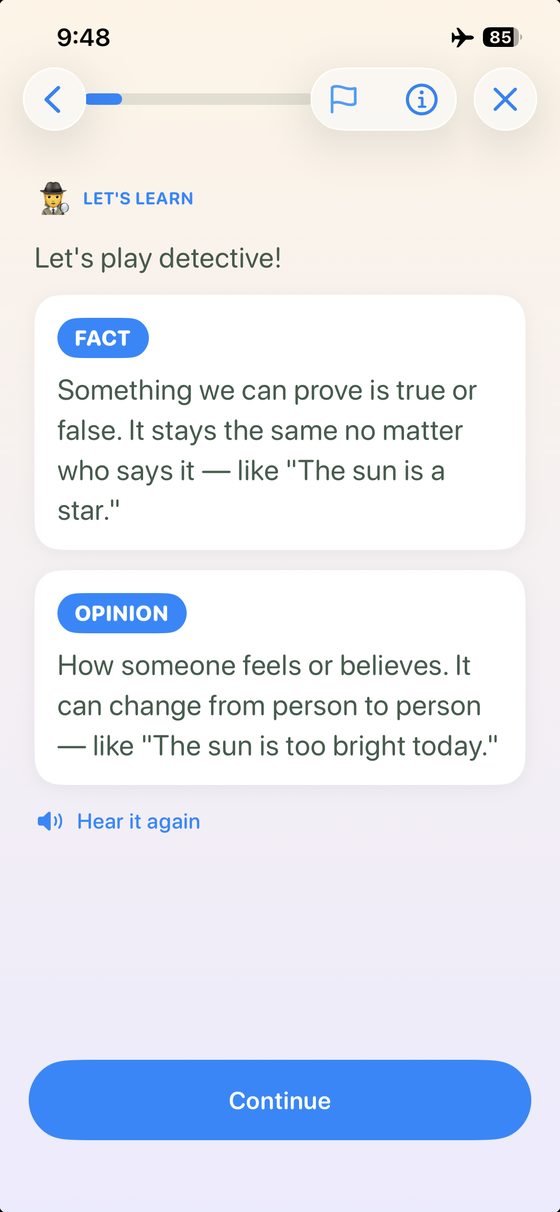
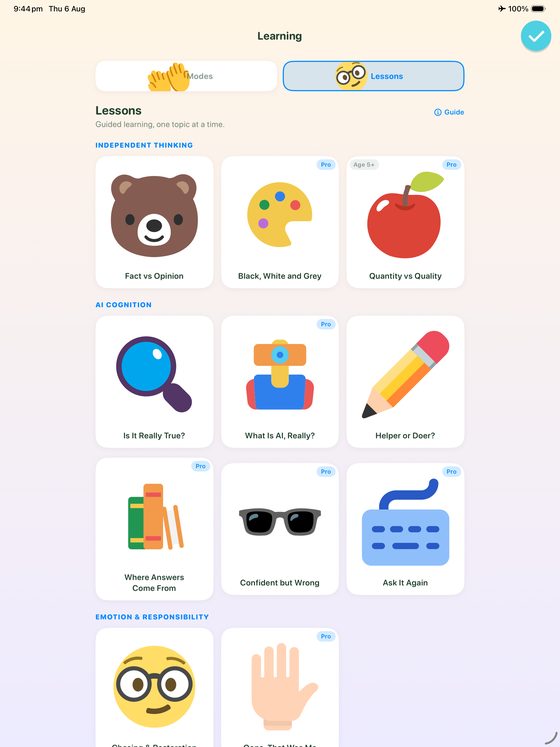
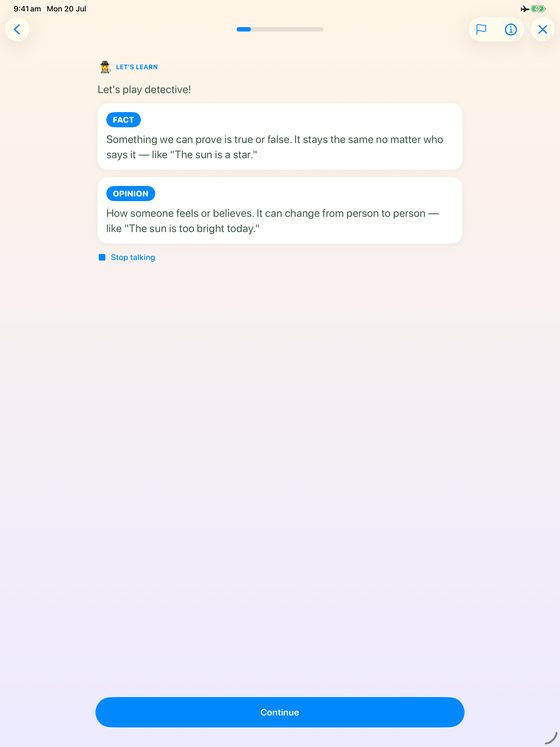
A structured, touch-first program — thirteen lessons across four tracks: Independent Thinking, AI Cognition, Emotion & Responsibility, and Online Life. Each lesson is mostly authored, reviewed content — explanations, definition cards, multiple choice — with one open “say it your way” moment the AI responds to, and a companion guide for the parent. The AI Cognition track is the unusual one: it teaches children to interrogate AI answers, including Evie's own.
3. Safety designed for disclosure, not surveillance
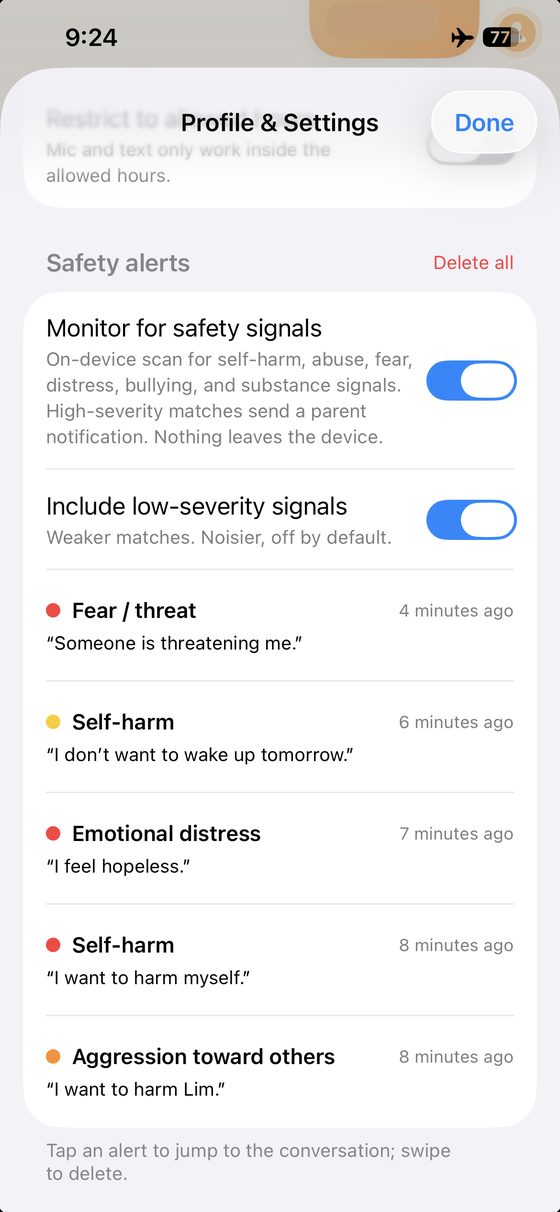
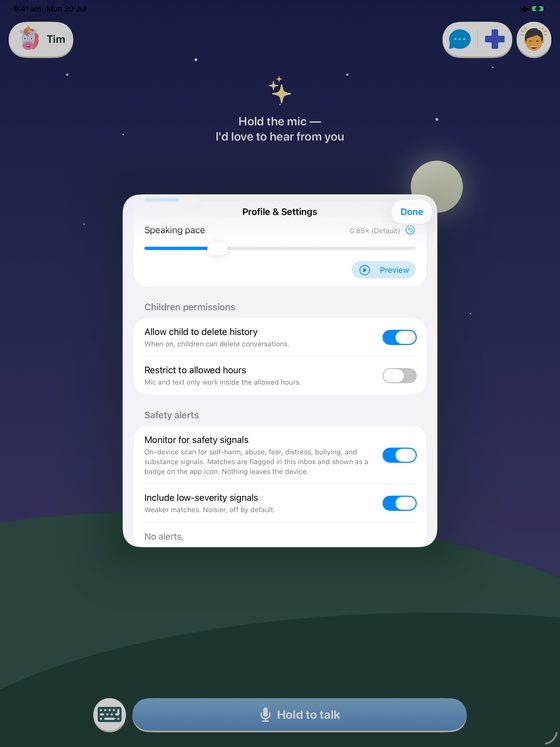
A two-tier on-device classifier flags concerning things a child says — self-harm, possible abuse, fear or threat, bullying, distress, substances, aggression — and surfaces them to the parent through an app-icon badge and a parent-gated inbox. It is deliberately an alerting system, not a filter or a transcript feed: nothing is sent anywhere, and the child is not blocked mid-sentence for saying they feel bad. Any reply can also be reported for parent review.
4. Parent mode that a seven-year-old can't walk through
Every control sits behind a math challenge: profiles, allowed hours by day of week, whether the child may clear their own history, safety settings, and the reported-response inbox.
What's new in v1.13.0 (August 2026)
- Six new lessons — the catalogue is now thirteen, and every track has at least two. Four of the six are about how AI actually works: whether a homework helper is helping you learn, where answers come from, why a confident answer can still be wrong, and what happens when you ask the same question twice. The back-to-school one, Homework Helper or Homework Doer?, is free for everyone.
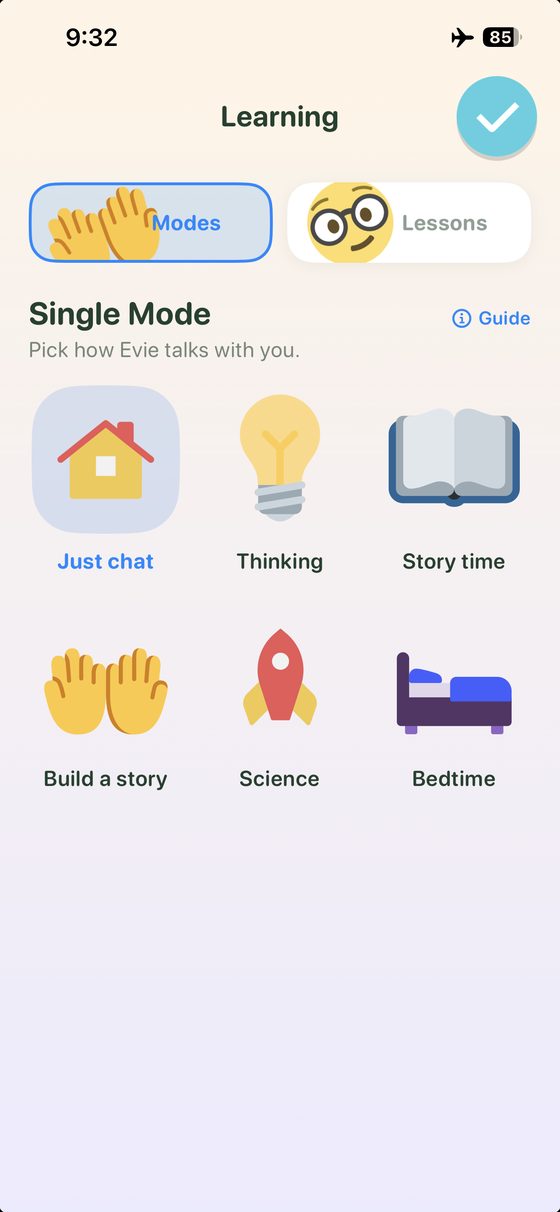
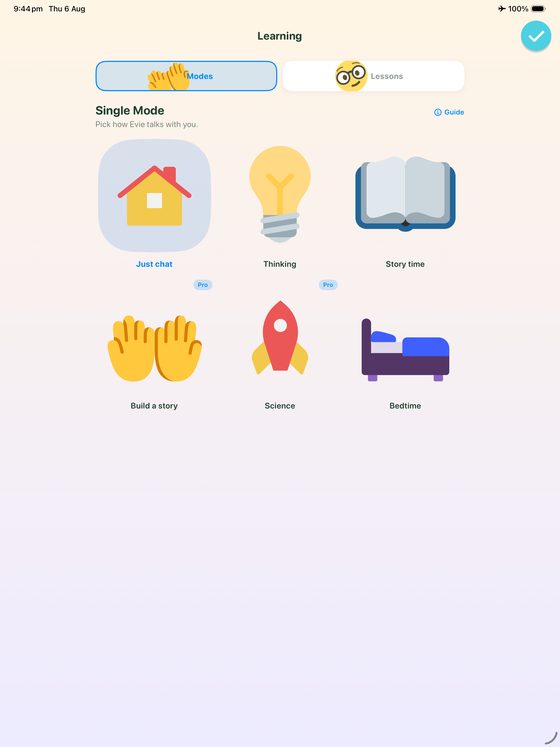
- Plainer names for the ways Evie talks: Thinking, Science and Bedtime. Children read these words in three places, and “Socratic” is not a word a seven-year-old picks.
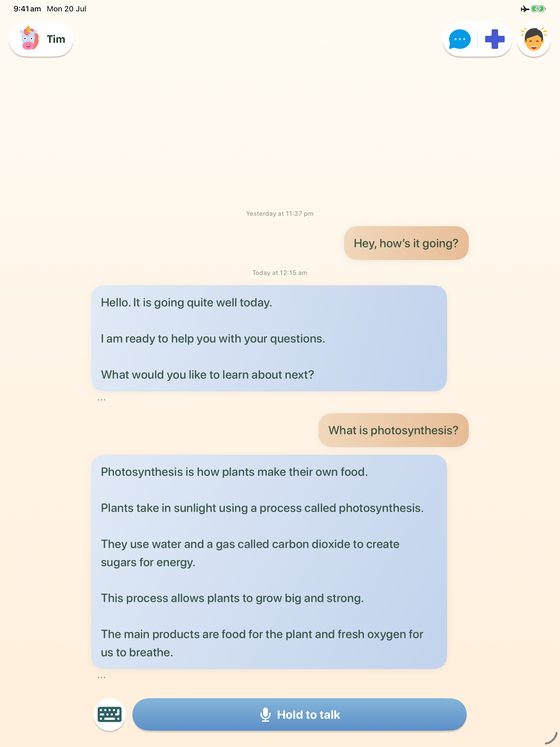
- Press and talk straight away. The microphone now opens in a fraction of the time, so first words aren't clipped, and a child can cut in while Evie is still speaking.
- The recording dot appears only while the mic is held. Evie never captured audio at other times; now the device shows that too.
- Fresh vector artwork across the app, sharp at every size, and much better support for large text sizes.
App preview
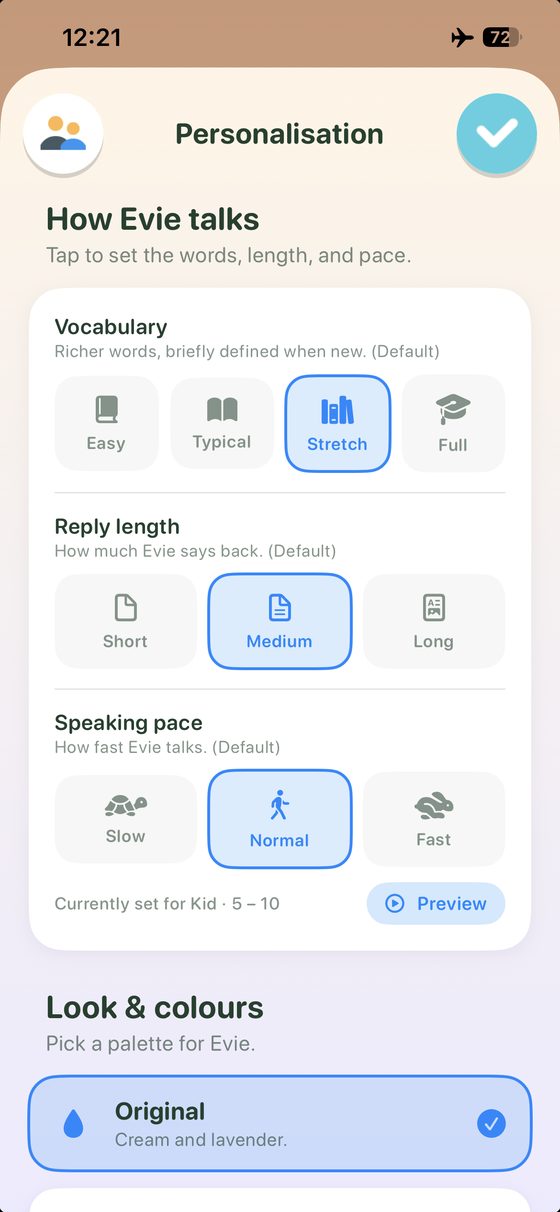
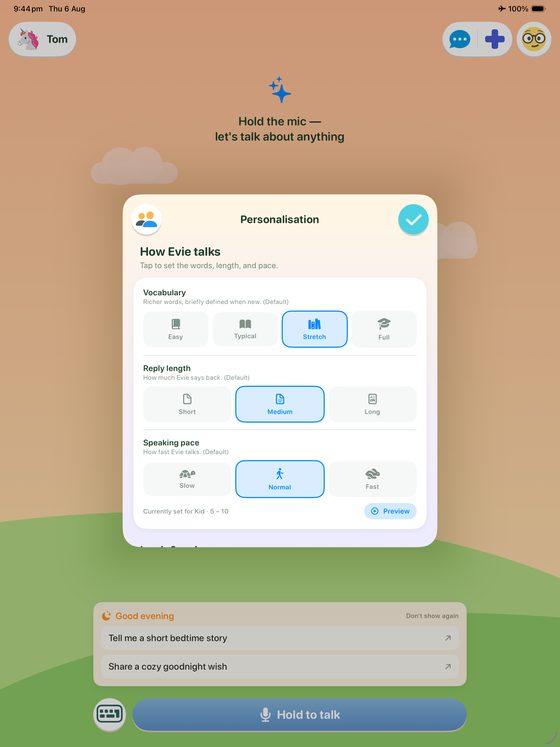
A 36-second walkthrough — a spoken answer, a parent tuning the assistant for one child, then modes and the Lessons program. The status bar stays in airplane mode throughout. Recorded on Evie 1.12, so the modes carry their older names; everything shown still works the same way.
Screenshots
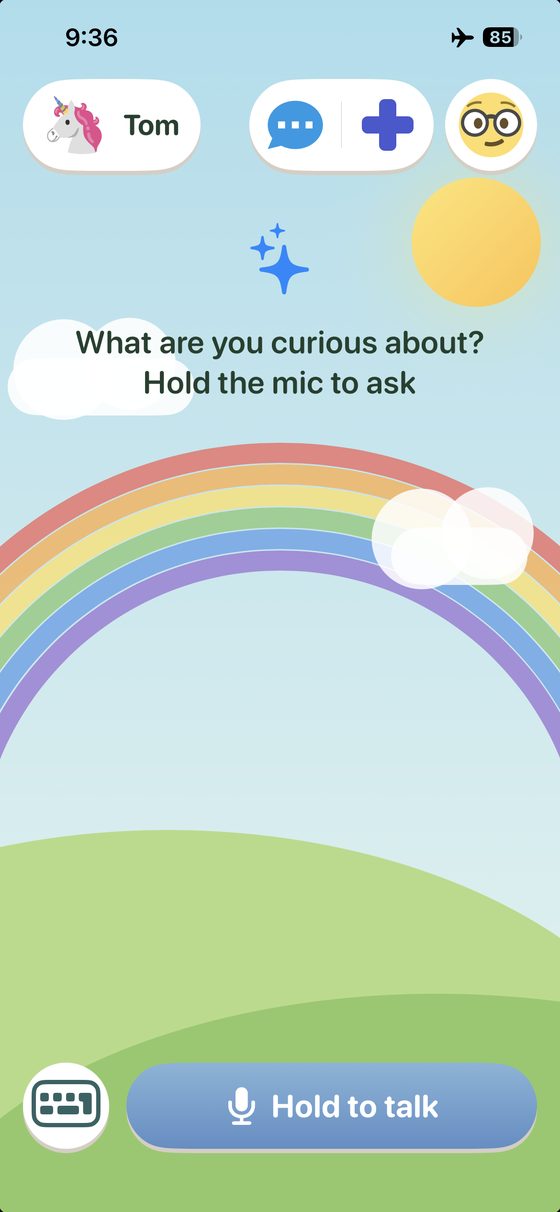
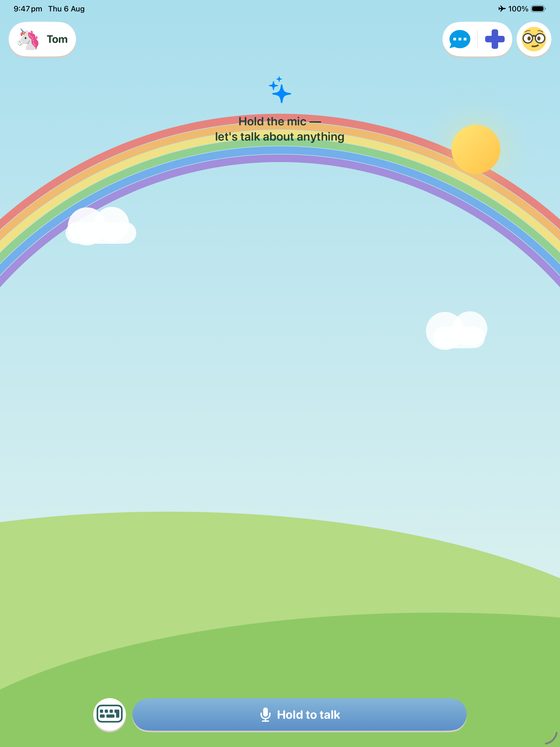
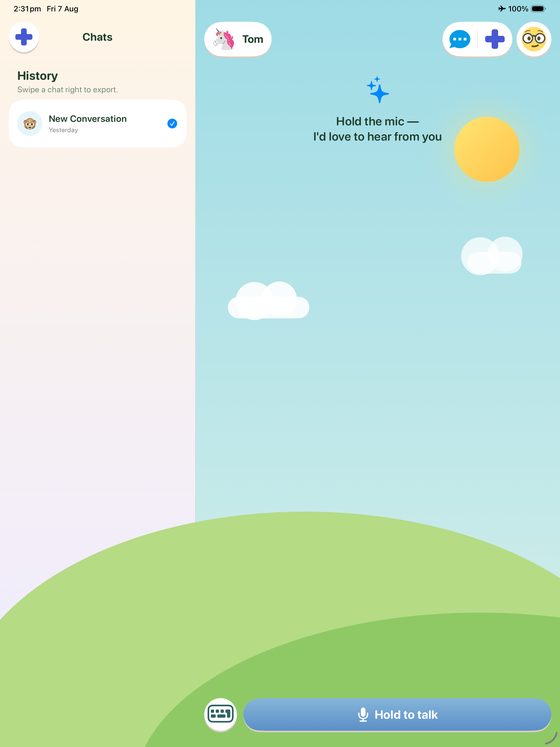
Clean interface captures from Evie 1.13, on iPhone and iPad — no overlay text, so they drop straight into a layout. Download all assets (ZIP, 15 MB): these 18 at full resolution in ui/, the nine iPhone and nine iPad App Store frames with our headline artwork in app-store/, and the 1024px app icon. The App Store artwork is also live on the listing. All of it may be used in coverage of Evie with credit to Human Before AI.
iPhone
iPad
Under the hood
- Speech to text:
SFSpeechRecognizerwithrequiresOnDeviceRecognition = true, push-to-talk capture viaAVAudioEngine. - Language model: Gemma 4 E2B, converted to Core ML and executed on the Apple Neural Engine.
- Text to speech: Kokoro-82M (Apache 2.0), a seven-stage Core ML pipeline; sentences synthesise in parallel and play in order.
- App: SwiftUI, StoreKit 2 for purchases. No third-party analytics, crash reporting, or advertising SDKs of any kind.
- Network use: the one-time model download (several GB, Wi-Fi) and Apple's own StoreKit. Nothing else, ever.
Why 13+
Evie is rated 13+ and is deliberately not in the App Store Kids Category. The on-device model is open-ended, and the Kids Category requires a content bar we could only claim honestly with a per-turn output filter that a fully offline, memory-constrained app cannot run today. Rather than misrepresent the app to get a friendlier badge, the rating reflects what the model actually is, and the safety work goes into the parent-facing surfaces instead: math-gated parent mode, allowed hours, on-device alerting, and a report path for any reply. Parents are told this plainly in the app's AI disclaimer at first launch.
Boilerplate
Evie is a private AI voice assistant for families, built by Human Before AI. Speech recognition, the language model and the neural voice all run on the device, so a child's conversations never leave it — no accounts, no cloud, no analytics. Evie includes audience-aware personas from toddler to adult, learning modes including Socratic questioning and storytelling, a guided Lessons program that teaches children how to think rather than what to know, on-device safety alerting for parents, and a math-gated parent mode. Free on the App Store for iPhone and iPad, with an optional Evie Pro subscription.
About Human Before AI
Human Before AI builds tools that put a child's own thinking ahead of the machine's answer. Evie is its first app.
About the developer
Evie is built by Chen-Kuo Chou in Adelaide, South Australia, under the name Human Before AI. He taught data science for six years at the University of South Australia, and started Evie after his seven-year-old son asked him how fast light travels — and he noticed his own hand already reaching for a device, ready to hand his son's question to a machine.
Two things followed from that. He wanted an AI his child could talk to that didn't send a word of it anywhere, which turned out to require giving up the server entirely. And he wanted it to make his son a better questioner rather than a faster answer-getter, which is why the app ships a lessons program teaching children to question AI — Evie included.
The long version, in his own words: I built an AI for my child, then taught my child to doubt it — quotable, and the source for the account above.
Chen is available for interviews at evie@humanbeforeai.org.